

The Insider/
A State of resilience
Australia exports many of the building blocks of the global energy transition while importing the refined fuels that keep its own economy moving. In more stable times, this contradiction has been easier to overlook.
The conflict in Iran is making it somewhat harder to ignore.
As disruption compounds from conflict and global oil markets, Australians have once again been reminded that energy security is not an abstract concept when you are at the end of a long supply chain.
This irony is sharp. A nation that can credibly leap into a clean energy future continues its dependence on fossil fuel supply chains that run through contested waterways and strategic chokepoints.
ReGen Strategic is increasingly engaging with existing operators seeking to decarbonise, or new market entrants seeking to accelerate the energy transition. These types of transition trade-offs will continue to emerge in a world that is shaking off established norms.
Global conflict has a way of transforming structural vulnerabilities from policy footnotes into headlines.
The Iran conflict is the latest in a pattern: the Strait of Hormuz, the Red Sea, the South China Sea. A pattern that should, by now, warrant a response more enduring than crisis management.
For government decision makers, political combatants, and proponents, the temptation will be to manage the optics of the current moment; to reassure, to stabilise, and to wait for calmer conditions before returning to the longer-term considerations.
That temptation should be resisted.
Australia holds some of the world’s most coveted energy transition assets, with critical minerals across the periodic table, immense renewable energy potential and the geography to serve as a clean energy hub for established trading partners.
The energy transition for Australia is not merely an energy policy. Increasingly it is national security and economic sovereignty.
For Western Australia, the stakes are particularly sharp. The state’s economic foundations are directly tied to the commodities underpinning global energy systems — iron ore, gas, critical minerals — making it simultaneously a beneficiary of global energy demand while desperately captive to its disruptions.
One aspect that the Iran conflict could accelerate is a convergence that was already underway, whereby energy security and decarbonisation are dealt with as mutually-beneficial policy objectives.
This will be an important pivot that the public needs to hear, over a longer period of time.
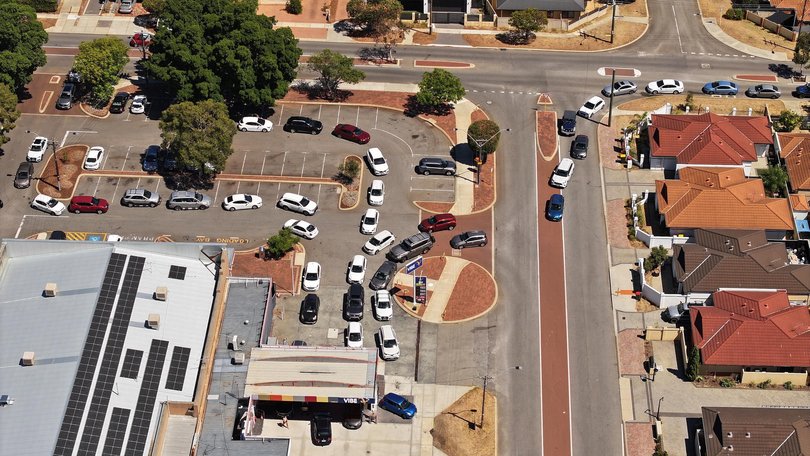
Petrol queues and panic buying are not irrational, but rather a rational response to a system the public has correctly identified as fragile. Where markets can no longer manage these responses, governments need to manage this anxiety and build greater resilience in its place. This is the case now as it was during COVID, with daily status updates and a focus on critical supplies.
Governments that face inflationary pressure and public restlessness over supply chains have historically had two options: reassure or reform. Reassurance is cheaper in the short term and more expensive in every other way.
With strong re-elected majorities in relatively recent memory, public anxiety about energy could be seen as a mandate, rather than an obstacle. The proponents and governments that recognise this may seek to move more decisively over coming months.
Image source: The West Australian