

The Insider/
Giving renters access to lower cost power
Australia’s energy transition is working for homeowners with money to spare. If you install solar on the roof, a battery on the wall, or an EV in the driveway, the government has been there to cover some of the cost. Renters miss out, and as more homeowners generate and store their own power, renters end up paying a larger share of the grid.
Demand for the Cheaper Home Batteries Program pushed estimated funding from $2.3 billion to $7.2 billion, and the rebate now steps down every six months. December’s mid-year budget update is weighing deeper cuts that the Grattan Institute modelled could save more than $1 billion over four years. The EV fringe benefits tax exemption is being wound back from April 2027. If those savings go back into general revenue, the benefits of the transition will stay mostly with homeowners.
With Canberra now winding back battery rebates and EV tax breaks for higher earners, can we now start to use public money for the people who have missed out – public and private renters?
Why now?
Renters are carrying more of the cost of the grid as homeowners rely less on it, and the money being saved from potentially removing homeowner subsidies could help change that.
- Homeowners no longer (really) need help. More than 4.5 million homes and small businesses have solar and 700,000 have a battery, and with prices falling and approved battery models almost tripling in a year, that market can grow without a subsidy.
- EVs are now cheaper to own. The oil price shock pushed them from under 7 per cent of small car sales to more than 20 per cent in six months, and models like the BYD Atto 1 now cost less than petrol equivalents.
- Public money is already moving to business, through federal rebates for commercial solar up to 1 MW and WA’s $153.3 million low-interest loan program for manufacturers.
Are landlords next? Including public housing, community housing, and above all private rentals, who own most rental homes?
Real-time control
For me and most people I know with solar and a battery, the biggest change has come from watching the system in real time and using power when it is stored, not finding out from a bill two months later. Energy reduction campaigns have had limited effect because nobody sees the result, and AI tools that automatically run appliances at the cheapest times are making control easier still.
That is the test for everything below: whether the person paying the bill gets real-time information and control through an app on their own phone, their own data and a tariff that rewards smart use, backed by the hands-on advice, which Rewiring Australia argues should be funded as a core program cost.
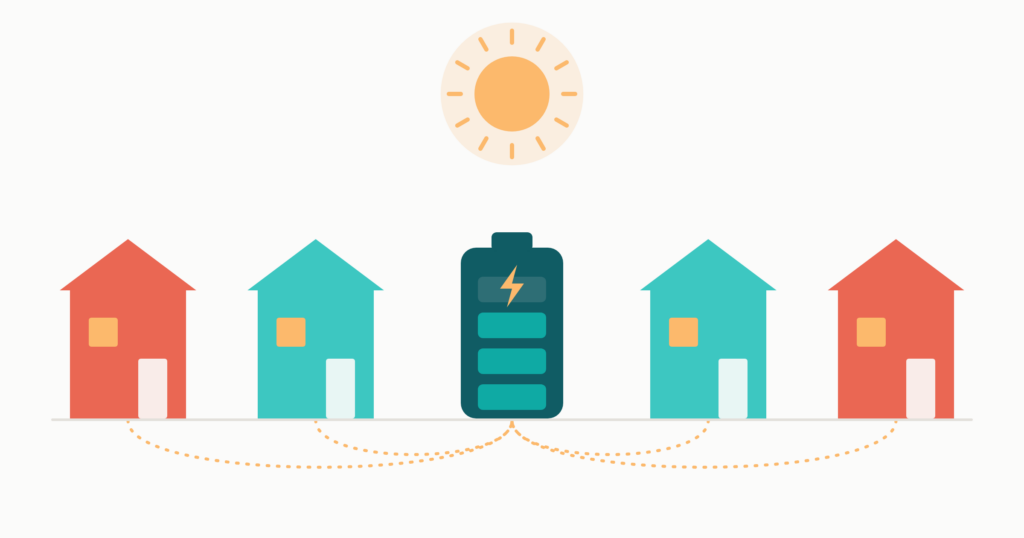
Renters can’t rewire a house they don’t own or put panels on a roof that isn’t theirs, so giving them that control takes creative, flexible solutions: plug-in systems they carry from home to home, shares in a community battery, payments in their name for letting the grid draw on their battery, solar sold to them by the landlord or the strata, and apps and data that follow them to the next address. The more of these options renters have, the more they can manage their own usage and own their bills.
Rental home incentives
More than 40 per cent of owner-occupiers have solar but only about 10 per cent of renters, and around a third of West Australians rent. The cause is the split incentive, where the landlord pays, the tenant saves, and the tenant has no right to install anything on the roof.
Solar and batteries are likely to spread through the rental market only when they make commercial sense for landlords. ANU research found rentals with solar earn about $19 a week more in rent, enough to recoup the cost in around five years while the tenant still saves, and landlords can also sell solar power to tenants below grid price.
Queensland pays landlords up to $3500 if the rent isn’t raised straight after installation, and Victoria adds an interest-free loan. The federal battery rebate could go the same way: ended for owner-occupiers on a set date and kept for homes that stay rented for five years, checked through bond records, with the tenant getting the savings and their own app login.
Roughly half of Australia’s apartments are owned by investors, which means the strata company decides what gets installed. Cheaper finance and simpler rules may help, including green strata loans the CEFC is developing with Lannock, NSW grants up to $200,000 per building, standard agreements for sharing solar and storage, and simple-majority strata votes for these upgrades. With this, apartment households could save up to $1800 a year.
Public housing and portability
In public housing government is the landlord, so the split incentive disappears. ACT upgrades under the federal Social Housing Energy Performance Initiative are saving tenants around $1800 a year.
In WA, community batteries have been a type of solution. For example, Synergy’s PowerBank pilot saved 533 households an average of $70 a bill, and Western Power is building 18 more. With more than 61,000 WA tenancies ending each year, renters also need energy they can take with them, and WA’s move to legalise plug-in solar and batteries – saving around $240 to $500 a year – is a start.
The plug-in decision is a good one, and Minister Sanderson explained that the benefits of cheap solar “have been out of reach for anyone who doesn’t own their roof”. WA will be the first state to allow these systems, which millions of European households already use, and renters won’t have to wait on a landlord or a strata vote, which is the kind of thinking that should shape every other initiative here.
Costs and returns
A solar and battery system costs roughly $15,000 on a house and well below that per unit in a shared block. Households with solar and batteries save up to $1500 a year, paying the system back in about ten years, and the biggest savers are the ones watching their usage.
WA’s levers
WA owns the retailer, the network and much of the housing, writes the strata and tenancy rules, and is already moving on several fronts. This is a complicated area with no single answer, and some ideas will need testing before they scale, but options worth exploring include:
- Extend the battery scheme’s landlord support to rental solar.
- Make shared solar and batteries simpler for strata buildings.
- Finish the plug-in solar work and consider rebates for plug-in batteries.
- Build solar and batteries into new social housing and upgrade existing homes over time.
- Let renters share community batteries and manage them through an app.
- Take WA’s lead to energy ministers and explore redirecting federal savings.
- Work with industry, researchers, renter, landlord and strata groups to test new models.
The goal
Homeowners added more than 50,000 batteries in WA in about 13 months of the federal program. If landlord and strata incentives drew even half that response, around 12,000 of WA’s roughly 350,000 rental homes would add solar or a battery each year. Over five years that is around 60,000 homes, saving renters around $700 to $1500 each year and drawing in around $180 million a year of landlord investment. These are rough estimates rather than modelling, but they show what is possible.
Public and private renters are more likely to get lower cost renewable power if public money draws in private investment rather than replacing it. Government spends directly only where it owns the asset, and every dollar puts a lower bill and real control in the hands of the person living in the home. WA has shown with plug-in solar that it is willing to back creative, flexible solutions, and every new option it gives renters is another way for them to take control of their own power.
Anthony Fisk is Managing Partner of ReGen Strategic and a member of the McKell Institute’s WA committee.