

The Insider/
Will the fuel crisis burn renewables in the budget?
Australia’s fuel crisis is about to collide with the budget.
Panic-buying has hit service stations, fuel caps are back in the news, and prices at the bowser are doing real damage to household budgets. The shock has already driven the Prime Minister to halve the fuel excise.
The harder question now sits inside the budget for the Government: do we protect the investments that make us less exposed next time, or do we treat them as just another saving line?
Building anger in the community
A Newspoll published on Monday gives a clear picture of where the community sits.
Newspoll — who is responsible for the fuel crisis?
- Rate government’s handling as poor – 57%
- Blame the war in the Middle East – 55%
- Blame the federal government – 24%
- Blame service stations and suppliers – 15%
We can see here that most Australians identify the war in the Middle East as the immediate cause. But 57% still rate the government’s handling as poor, and almost a quarter blame the federal government directly. This is not a contradiction. People understand this crisis started with the Strait of Hormuz, but they are angry that years of policy choices from successive governments on both sides of politics left us with only 36 days of fuel, and one hand tied behind our back when the shock arrived.
The same poll found that by more than 3-to-1, Australians disapprove of US military action against Iran. After Donald Trump labelled Australia “not great” for its position, the public’s response was measured, not reactive. That combination of disapproval of the conflict, and pragmatism about Australia’s position, speaks to exactly what the community wants: arrangements that reduce their exposure to decisions made in Washington and Tehran that they didn’t ask for and can’t control. In other words, energy independence.
Voters have already shown they can hold two ideas at once: that the war lit the fuse, and that domestic choices loaded the explosives. That makes it harder to sell a story that trades away long-term resilience for another three months of relief.
Political reactions to the crisis
The Opposition’s initial response to the crisis was to fund any fuel excise cut by axing the fringe benefits tax discount for electric vehicles, pausing home battery subsidies, and cutting green hydrogen funding. The argument was that households needed relief, and the transition would have to pay for it.
But each of those proposed cuts would only increase our future vulnerability to fuel shocks. The EV fringe benefits tax discount accelerates the shift away from petrol-powered vehicles. Home battery subsidies deploy distributed storage that builds grid resilience. Green hydrogen investment underpins future industrial decarbonisation. Using these to fund a temporary excise means we arrive at the next crisis in a more exposed position than this one.
The government has, so far, been more measured. Following National Cabinet, the fuel excise was halved for three months, alongside zeroing the heavy vehicle road user charge and today, more relief for small businesses. EV and battery incentives are left intact – for now. The message is that emergency relief can come from the budget without cannibalising the instruments of long-term resilience.
But as costs mount and the pressure to find savings intensifies, the rationalisation for cutting transition investment to fund immediate relief will return. It should be resisted because the fuel shortage Australia is living through right now is precisely the vulnerability that a faster transition is designed to reduce. Cutting these policies helps contribute to the severity of the next crisis.
WA: The middle way
Meanwhile, the WA Government has been taking a middle path, quietly and under real political pressure, and the current national crisis validates every step of it.
For example, as Greens and environmental groups called on the WA government to stop gas exploration and halt expansion projects including Scarborough, the government resisted.
Premier Roger Cook has reinforced WA’s domestic gas reservation policy, updated it, and struck a new deal with Woodside that increases domestic supply obligations in exchange for expanded export rights. Onshore gas exports will be banned from 2031, with 100% of production required for the domestic market from that point. The Scarborough field, now over 94% complete, will supply 225 terajoules a day of gas to WA through the Pluto plant.
At the same time, WA has committed over $3.8 billion to the coal-to-renewables transition, is investing $584 million in the Clean Energy Link transmission program, and is building toward a SWIS Transmission Plan that will unlock 2.6 gigawatts of new renewable capacity. The SWIS hit 85.1% renewable penetration in November 2024.
Resisting the call to stop gas exploration was not politically easy, but the Government was acutely aware that the transition could not occur without a secure supply of domestic gas. It prosecuted the argument with the community, which delivered a more nuanced debate about energy security and reliability, and a more educated public.
This mix matters: it keeps industry supplied now and creates real demand for new clean energy and hydrogen projects over the next decade.
Resource sovereignty and the transition, together
As the saying goes, never let a good crisis go to waste.
This is the time, not just to address the very real cost of living issues, but to use the crisis to improve our long-term energy security.
The practical answer is a twin track. On one side, strengthen resource sovereignty so fuel, gas and fertiliser shocks overseas cannot bring our economy to a halt. On the other, press ahead with the energy transition so we depend less on imported oil in the first place. WA’s mix of gas reservation, grid investment and record renewable penetration shows this is not a choice between old and new energy, but a portfolio that makes us more resilient on both fronts.
Hold the line
When households are lining up at service stations, the voices arguing for the simple fix are loud and well-resourced. That is exactly the moment when the quality of political leadership matters most.
Those Newspoll numbers demonstrate that the public has more capacity to hold complexity than the loudest voices wrongly assume. A community that can simultaneously identify a geopolitical cause and hold government accountable for structural failure is not looking for a simple story. They want to know what we are going to do about it.
The Cook Government’s approach in WA is commendable because it was not easy. It held gas reservation and continued gas exploration in the face of pressure from environmental groups and the Greens, while committing billions to the transition against resistance from the other direction. That is the kind of leadership the national conversation needs.
Budget premortem: Where the cuts will be tempted
As the budget comes together, the fuel crisis and the savings hunt will converge in a familiar way. The biggest temptation will be to reach for the same set of programs that have become shorthand for the transition: EV tax concessions, household battery support, and hydrogen funding. Each looks like a neat, high-dollar saving. Each is, in practice, an instrument for making the next crisis less severe.
Questions will be raised as to whether hydrogen funding can be deployed at the promised scale, whether battery rebates are too generous for larger systems, and whether EV incentives can be slowed without obvious political cost. But if we wind back these schemes, we also risk undermining the very industrial strategy – a future made in Australia – that the government has spent years selling.
The budget outcome is likely to be a compromise that keeps the labels and trims the ambition. In a world where tankers can be blocked for weeks and domestic fuel cover can fall to a little over a month, the question is whether we treat EVs, storage and hydrogen as expendable line items or as part of the same energy security toolkit as gas reservation and strategic reserves.
Western Australia’s experience suggests there is another way through this: hold the line on the transition, strengthen resource sovereignty, and be honest with the public about how they complement each other. The public have already shown they can handle that complexity. The test in this budget is whether political leaders, and the businesses who rely on them, choose to.
Today is April Fools’ Day. The public are not fools, and anyone still banking on that assumption hasn’t been paying attention.
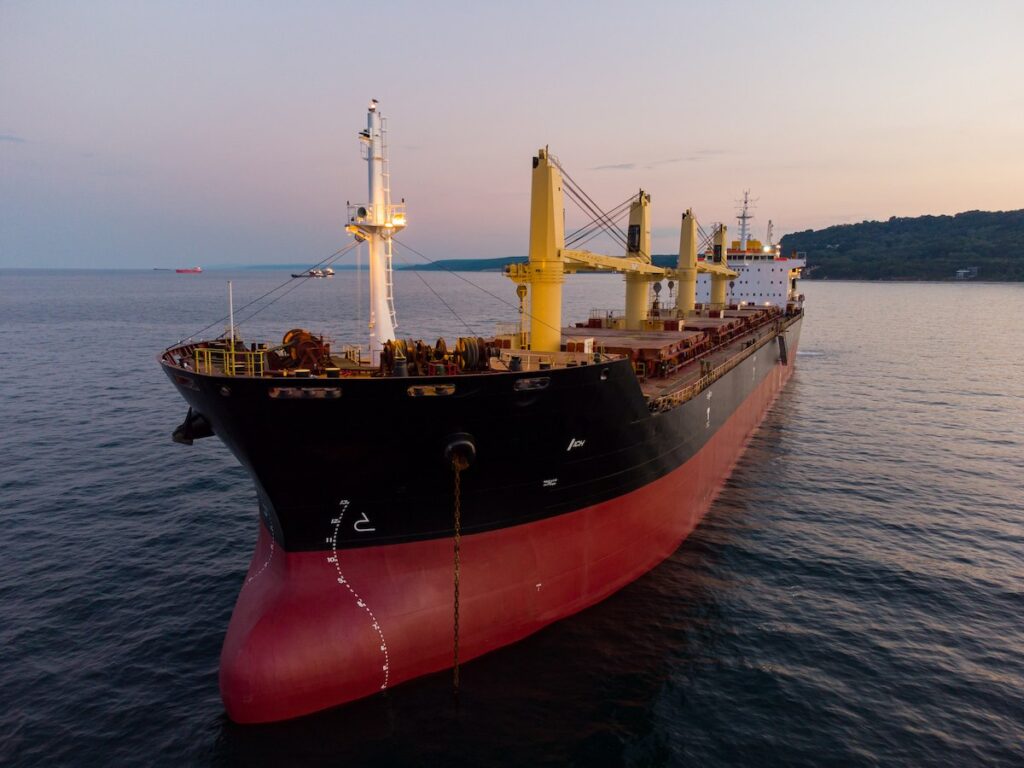
Image source: ABC News Australia