The Insider/
Jobs, health, housing: a path to a fourth term
Metronet’s final station, Midland, opened in February. The Cook Labor Government is now switching tracks (pardon the pun) from the McGowan legacy to the Cook priorities of jobs, health and housing. Although we’re still more than a week out from the WA budget, a fortnight of big announcements gives us plenty of clues as to how this government intends to realise their stated priorities.
The fortnight in numbers
In just the last 14 days, the Cook Government has pre-announced a tranche for the 2026-27 State Budget:
- Power: $1.4 billion Clean Energy Fund, with Clean Energy Link – East and transmission into Kwinana to be declared priority projects under the State Development Act 2025. $7 million will also be provided for Horizon Power’s renewable transition in West Kimberley, Coral Bay, Hopetoun, Denham and the Pilbara.
- Water: $2.7 billion of capital in 2026-27 inside a $6.4 billion four-year program across Water Corporation, Aqwest and Busselton Water. Includes $606 million for the Dampier Seawater Desalination Plant, $64.1 million for the Integrated Water Supply Scheme serving more than 2.5 million people, $11.8 million for the West Pilbara Water Supply Scheme and $23.8 million for Boodarie SIA water investigation.
- Health: $1.5 billion in additional health infrastructure over the forward estimates, taking total investment to $5.5 billion. A $500 million uplift to the Building Hospitals Fund takes that fund to $2 billion over four years, supporting around 900 new beds. Albany Health Campus modular expansion fully funded at $59 million inside a $60 million project.
- Industry: More than $90 million from the Strategic Industries Fund supporting five new Priority Projects and the State’s first declared State Development Area. Includes $45.2 million for land assembly at Latitude 32, $11.3 million for Kemerton SIA, and $27.1 million for Boodarie SIA infrastructure corridor and water supply work.
- Roads: $339.9 million for road safety, funded through the Road Trauma Trust Account and delivered between 2025-26 and 2029-30.
- Housing: $40.7 million plus a $12 million operating subsidy to DevelopmentWA for 111 new lots in Broome North, including 33 social housing dwellings.
Roughly $3 billion lands in 2026-27, with extra infrastructure funding across the forward estimates close to $6 billion. Federal Defence commitments to the Henderson precinct, at around $5 billion over the forward estimates and $15 billion across the decade, will act as significant multiplier to help boost jobs and industry diversification.
State Government priority alignment
Premier Cook published Our Priorities for Government 2025-2029 last September to deliver against three priorities: jobs, health and housing. This budget provides the roadmap to deliver. Jobs through diversifying the economy, becoming a renewable energy powerhouse, securing the water future in a drying climate, making more things here, and developing defence industries at Henderson. Health through delivering new hospital capacity and investing in the workforce. Housing through increasing land supply, reducing red tape, encouraging private investment, and delivering more social, community and affordable stock. It is also worth noting the big investments in the regions – including Pilbara desalination, Mid West and South West transmission, Kimberley renewables and the Boodarie SIA.
Public capital, private investment
Much of this State capital pulls private capital alongside it, which acts as a multiplier to encourage new private investment, businesses and jobs. The Clean Energy Link transmission corridors function as a platform for private wind, solar, BESS and gas powerplant developers to commit to generation in the Wheatbelt, Mid West, South West and Western Trade Coast. The Strategic Industries Fund and infrastructure corridor works at Latitude 32, Kemerton and Boodarie unlock private industrial investment in those zones, with a disproportionate spend going to the regions to support downstream processing and other industrial growth. Stamp duty concessions for off-the-plan apartments, red tape reduction for housing developments and State equity behind regional lot releases like Broome North are designed to clear the way for private developers and investors to build more homes in the areas where supply is shortest.
WA’s revenue position
WA’s fiscal position is unique in the federation. By 2027-28, gross state debt per capita is forecast at around $18,000 in WA against an average of around $30,000 across the four mainland eastern states. The driver is sustained revenue strength: high iron ore and gold prices feeding State royalties, growing stamp duty returns from a booming Perth housing market, and a guaranteed GST flow.
The Cook Labor Government can choose what to do with that revenue, and this Budget cycle directs it firmly at infrastructure.
Jobs across the economy
The infrastructure spend is also a jobs program. Premier Cook flagged around 800 construction jobs across the Clean Energy Link transmission corridors alone. Thousands more sit inside the Building Hospitals Fund pipeline, water infrastructure upgrades, Strategic Industries Fund, and new housing developments across the state. Defence-enabling infrastructure at Henderson layers another wave of trades and engineering demand on top. Despite the labour squeeze, the new jobs are in construction in the near term, with operational jobs in health, water and renewable energy following as projects come online. Tied directly to the “make more things here” pillar of the State Government Priorities, locally manufactured wind turbines, transmission components and modular build elements are part of the same picture.
More mundane; less Barnett
Enabling infrastructure will be the Cook Government’s legacy – a big departure from the legacy of the previous Liberal Government. The Barnett era left metropolitan set pieces: Elizabeth Quay and Optus Stadium. The Cook era is laying down what those projects sit on top of – transmission, desalination plants, hospital beds, industrial corridors and serviced lots. Long-term economic infrastructure, designed to outlast the political cycle that built it, and to set the state up for the next decade of population, defence and industrial growth.
The cost-of-living question
The pre-budget commitments on cost of living so far are modest. One universal measure is the $70.1 million to make free Sunday and student public transport permanent and to lock in half-price Transperth fares. Targeted measures sit alongside it: $33.8 million for the seniors cost-of-living rebate and the Energy Concession Extension Scheme for families holding eligible concession cards.
We expect these numbers to grow, but the question is by how much. The significant spend across infrastructure and jobs creation may leave less room for big cost-of-living payments. Anything is possible but, for what it’s worth, we expect to see more targeted relief for pensioners, concession card holders and families with school-aged children. These will likely be smaller payments with narrower eligibility for those most exposed to cost pressures – think car rego relief and school-age family payments.
Positioned for 2029
The next State election lands in March 2029. By that date, Clean Energy Link – North is on track to be complete and CEL East well into construction with a 2029 commissioning date in sight (and we will know by then if the ambitious plan to transition out of coal by 2030 is possible). The Dampier desalination expansion, five hospital expansion projects, and industrial corridor works at Latitude 32 and Boodarie will be well advanced or operating, with private generation, industrial and housing investment very visible. This is the construction and jobs backdrop for a WA Labor campaign for a historic fourth consecutive term.
What it means
For proponents bringing projects into this market, the message is consistent. The WA Government is building the platforms (transmission, water, serviced industrial land, housing release) and inviting private capital to build on top. Projects that fit inside the Priorities frame, with specifics on jobs, decarbonisation, water security, regional benefit or housing supply, will find more receptive doors at every level of government, and a clearer path through the State Development Act 2025 where that lever applies.
For households, the read is harder to call. The big numbers in the Budget on 7 May will sit under taps and powerlines and hospital beds. Direct relief at the kitchen table is more likely to be targeted than universal this cycle, though Budget night can still deliver surprises.
Of course, ReGen Strategic works with proponents on delivering the private capital the WA Government is seeking to deliver against its jobs agenda in renewable energy, critical minerals, industrial decarbonisation, housing and major development. If you are positioning a project to take advantage of this Budget cycle, we would welcome the conversation.
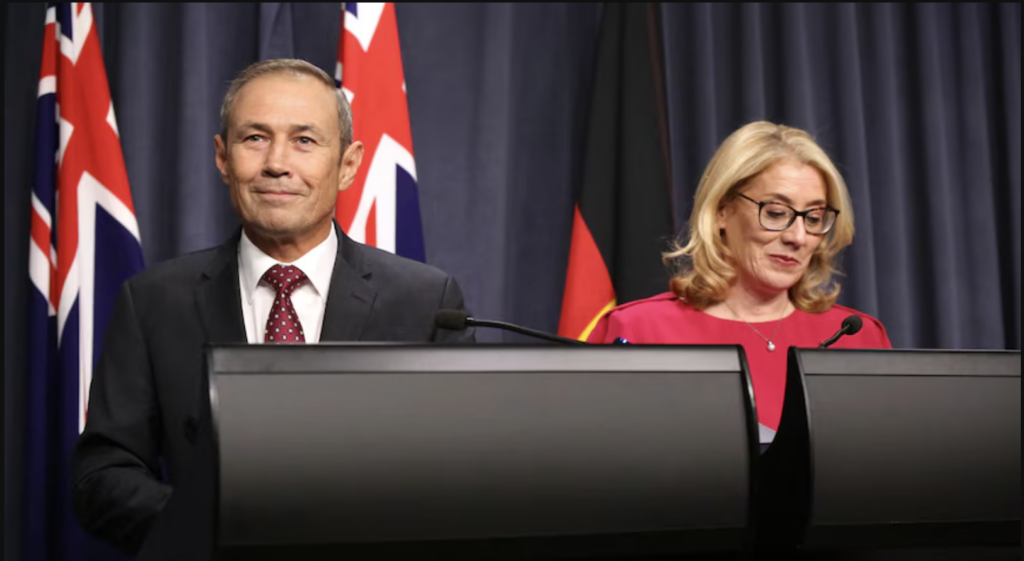
Image source: ABC News Australia