The Insider/
In a world of carnies, be a Carney
Unconventional does not begin to describe how different the world is from a decade ago. The ravages of a global pandemic. The advent of AI. The return of tariffs. The prospect of forever wars. Sharpies redrawing Scholastic maps.
Individually, these shifts are seismic. Collectively, they represent the tearing apart of the rules-based order. Like bankruptcy, this happened gradually, then suddenly.
Weaving amongst this change has been the emergence of political populism. Once again happening gradually, then suddenly.
This form of politics is a carnival act. It runs on spectacle, anger, and grievance, with the reliable promise that someone else is to blame. This works because it asks nothing of the public except anger and frustration, without disclosing who funds it or benefits from it.
It sells the feeling of a win, not the win itself. It also should not go by unchecked.
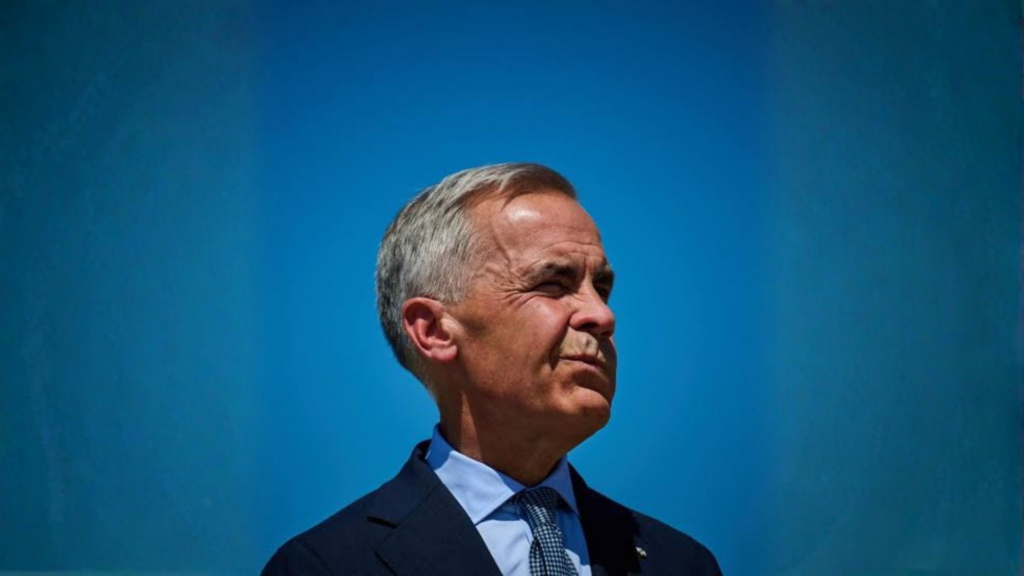
Mark Carney, Canada’s somewhat accidental Prime Minister, has sought to respond to the breaking global order with combative cooperation, spending his first year building a method with willing partners that should be studied closely.
Carney’s starting point is not comfort. Speaking to the Council on Foreign Relations last September he refused to offer reassurance, emphasising what the world is living through is “not a transition; this is a rupture”. When Davos rolled around in January, he was even blunter, telling a room built on faith in global rules that the order they had gathered for decades to defend was finished. To paraphrase, nostalgia was not a strategy.
This radical candour is the first break from populist rhetoric. A populist might flatter with promises that the old certainties can be alchemised back into existence. Carney levels with the public that they cannot, then turns to the harder question of what to do next.
Cooperation as a counterpoint
When addressing the Australian Parliament in March, Carney outlined a method he called ‘variable geometry’, where different coalitions are assembled for different problems, built around the interests and values genuinely shared on each one, rather than a single fixed bloc for every purpose. A Swiss Army Knife instead of Thor’s Hammer.
Canada defends its trade sovereignty when threatened by bellicose tariffs, sits in the coalition of the willing on Ukraine, stands with Greenland and Denmark on Arctic sovereignty, as well as holding its NATO commitments, treating each as its own arrangement.
While the method is not yet a fully-fledged new order, in a fractured world, a collective voice achieves what solitary strength cannot.
The rupture reaches Western Australia
None of these shifts are confined to global summits, trade corridors or borders. The same forces surface in WA’s economic debate. The populist pitch here is now very familiar. The transition costs too much, moves too fast, will fail in parts and threatens the industries that built the state. This favours the status quo, despite the world moving rapidly around us.
WA has spent recent years inching into diversification, carefully mapping pathways, moving fast on the obvious opportunities while still hedging on the harder ones. The populist reaction would be to point to a lack of progress and retreat. The risk is not that WA fails to advance. The risk is that it slides back.
This is a collective problem for proponents that are seeking to diversify WA’s economy. A single proponent lobbying alone is easy to dismiss or to pick off one at a time. A sector or an alliance speaking together, from a thorough evidence base, sets the terms of the conversation. This is variable geometry brought to WA’s energy transition.
Collective voices, closer to home
The logic that makes variable geometry work for Carney can also be deployed by willing participants around a shared interest in WA. And because of public ownership of WA’s energy grid, the State holds much of the authority that decides the velocity of the transition.
A collective vehicle that brings proponents and communities, as well as government, into a common conversation can do what no single company can. It can set the conditions for action, then back the delivery-ready projects that carry the state from delay into diversification. It is a coalition of the willing for WA’s own transition, built to hold the line against backsliding as much as to push the state forward.
The crowded-in capital, the approvals as well as the social licence are increasingly won by coalitions, not by lone proponents. Projects that can position themselves inside a shared agenda, on critical minerals, metals processing, clean energy or long-duration storage, will find the conversation easier to make than those that are on a soapbox by themselves.
In an environment that can weaponise public sentiment against a single project, industry cooperation is a competitive advantage, not a nicety. The proponents who help build this collective voice will have a hand in shaping the conditions that can accelerate their markets and connect WA to a rapidly changing world.
Image Source: Boston Herald