

The Insider/
Betting the house
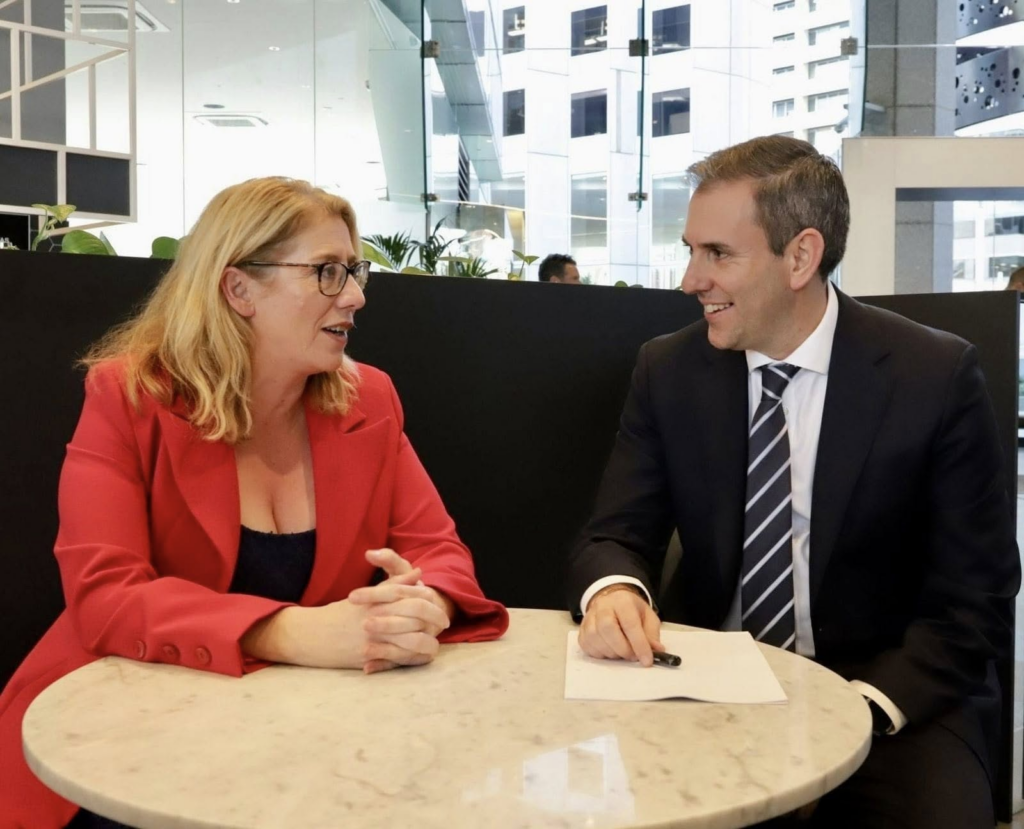
Both the Albanese and Cook Labor governments have used the past week to pitch their housing budgets. WA Treasurer Rita Saffioti delivered the Cook Government’s last Thursday with $4.7 billion of housing measures at its heart. Federal Treasurer Jim Chalmers handed down his fifth budget last night, with the Prime Minister saying it rewrites the housing tax system to lift supply and improve intergenerational fairness.
We’ve seen a lot of analysis around this budget, particularly in relation to tax changes and the political wash-up. But what does the federal budget do to help WA’s mission to house more people, particularly those on lower incomes?
Jim Chalmer’s budget does most of its work on the demand side. The Commonwealth has very limited fiscal room to splash cash around on direct supply, but the measures it has announced complement the housing work WA has had underway for several budget cycles.
ReGen Strategic has noted several times since the WA and Federal elections in 2025, re-elected governments have both the political capital and the hard-earned experience to tackle long-term reform.
The WA platform, in short
As Patrick Gardner covered in The Resilience Budget, Treasurer Saffioti committed an additional $4.7 billion to housing over the forward estimates. Headline items include $1.5 billion in new affordable and social housing in partnership with the Commonwealth, $522 million in water and energy infrastructure to open 64,000 lots, predominantly in outer suburban and major regional centres, as well as a $297.3 million housing taxation package supporting first home buyers and new supply.
Supply: enabling infrastructure
The federal budget commits $2 billion over four years from 2026-27 for the critical “last mile” infrastructure that turns zoned land into building sites: power, roads and drains to deliver 65,000 new homes over the next decade. A separate $1.2 billion has been allocated to states and territories for housing infrastructure, and a further $500 million sits in the budget to streamline environmental approvals for new builds. This helps the WA reform agenda, but not equally.
By comparison, the Cook Government’s $522 million enabling infrastructure package is expected to realise 64,000 lots over the four-year forward estimates in this state alone. WA is seemingly more efficient at unlocking land, with its infrastructure spend averaging about $8150 per lot, whereas the federal $2 billion works out at about $30,800 per home unlocked.
One reason for this is that WA’s utilities are still in state hands, and the WA Government has funded backbone capacity expansion separately, through Western Power’s $973 million budget allocation and Water Corporation’s capital program.
Much of WA’s enabling infrastructure spend is being directed at METRONET station precincts rather than pure greenfield expansion. The $522 million package names Ballajura, Yanchep and Byford as METRONET precincts, with a further $127 million targeted specifically at those three locations. METRONET precincts are the land within 800 metres of a train station, where the State has set higher-density zoning, taken on the role of responsible decision-maker, and fast-tracked planning. Servicing higher-density transit-oriented housing is cheaper per dwelling than servicing detached suburban lots. The same trunk water main, sewer line and substation serve many more homes. The package also funds more conventional growth-corridor work at North Ellenbrook and East Wanneroo.
Finally, the state government is committed to leveraging federal funds to build homes wherever possible. For example, WA’s share of the earlier $217 million community enabling infrastructure fund was 42 per cent, materially above population share. Treasurer Saffioti has signalled the State will be pushing for a same line for any new allocation:
“We’re very keen to make sure housing is the number one priority. Making sure we continue to drive housing supply, this is both a national and a state issue. From my perspective, it’s about housing and it’s about infrastructure.”
The combination of state-owned utilities, METRONET-led density and a state government willing to spend Federal money is why the WA supply package will continue to yield more homes per dollar.
Demand: tax and migration
The federal budget moves housing demand simultaneously on two fronts.
The taxation of capital has been subject to the most significant change in a generation. The 50 per cent capital gains tax discount will be replaced with a pre-1999 style inflation indexation model from 1 July 2027. Negative gearing will be restricted to new builds only, with existing investments grandfathered. The Government estimates the package will help up to 75,000 young Australians into a first home by reducing investor competition for established stock.
WA was an early signatory to the new national partnership reserving up to 100,000 new homes for first home buyers and has been allocated $212.3 million in this Budget under that partnership.
The supply-side scoreboard tells a more complex story. The Government’s own modelling estimates the combined design will work to reduce housing supply by around 35,000 dwellings over the next decade. Set next to the 65,000-home enabling infrastructure estimate, the implied federal net contribution to supply is closer to 30,000 additional homes over the decade, a very modest outcome when you consider this against the 1.2 million National Housing Accord target.
And while migration seems to be stuck at levels higher than previously forecast, the Government has committed $85.2 million for faster skills assessments and occupational licensing, designed to facilitate up to 4000 additional skilled trades workers per year, mainly in construction and electrical trades.
Again, these are modest goals considering HIA’s estimate that meeting the 1.2 million homes target requires 190,000 extra construction workers by 2035, and Infrastructure Australia’s 300,000 peak shortfall by mid-2027.
Freeing up existing homes
The least examined part of the housing supply conversation is the homes already built. Many older Australians are staying in family-sized homes because the next move is too hard or because there is no aged care place to move into. Adult children are unable to share a block with their parents because planning rules will not allow it.
Health Minister Mark Butler had pre-announced a $3 billion aged care package. The package includes 5000 additional residential aged care beds per year, $1 billion for the Support at Home program, $200 million for 20 specialist dementia care program units, and new targeted capital subsidies for newly built or refurbished residential aged care homes.
Each older Australian who moves into a new bed is returning a family-sized home to the market. WA’s share of this measure will unlock up to 550 beds per year, mostly across metropolitan Perth and regional centres where the waiting list is longest. Over four years, that is roughly 2200 family homes returning to circulation in WA without the construction industry having to build a single new house.
Second, the new capital subsidies for newly built or refurbished residential aged care homes expand the medium-term capacity of the sector to receive older Australians.
Third, the Support at Home expansion makes it easier and more affordable for older Australians to remain at home or move in with adult children. Meanwhile, WA’s planning changes permit granny flats and second dwellings on existing lots. Together, these measures allow seniors who might otherwise move to a smaller apartment or into aged care to stay on the family property in a purpose-built granny flat with subsidised in-home care. This keeps the family home in use, adds a second dwelling to the lot, and frees up an aged care place for someone else who needs it.
The federal housing scoreboard
Last night’s housing initiatives stack on top of several years of federal housing supply commitments.
The National Housing Accord was signed in 2022 with a target eventually set at 1.2 million well-located homes over five years from mid-2024. The Commonwealth has the $10 billion Housing Australia Future Fund funding 40,000 social and affordable homes over five years. The Help to Buy shared equity scheme assists up to 40,000 first home buyers over four years. The New Home Bonus committed $3 billion to states and territories. A further $3.5 billion has been allocated to states, territories and local governments to support new homes against the Accord target. Build-to-rent tax incentives have been operating since 2025.
However, the most recent National Housing Supply and Affordability Council report puts only Western Australia, Victoria and the ACT on track for their share of the 1.2 million target.
The wash up
Two governments are now calling this their housing budget. Both target enabling infrastructure ahead of supply, they tilt tax settings to favour new builds, and favour first home buyers to enter the market.
In summary, the WA Government has thrown a much larger share of its budget into housing than the Commonwealth, in a state already running at 22 per cent of the National Housing Accord allocation. Nevertheless, the Feds are doing some of the heavy lifting: tax redesign is intended to redirect investor capital toward new builds, there is hope on the aged care front and we’ll see more licensed tradies via faster skills assessments.
There is much to do if we are to help every West Australian secure an affordable place to live. Our assessment is that this budget helps, rather than hinders our State Government reach this ambitious goal.
ReGen Strategic works with proponents whose projects sit at the intersection of housing, planning, critical minerals and industrial decarbonisation. If you are reading the federal budget papers at budget.gov.au and trying to work out what the combined state and federal settings now mean for your project pipeline, we welcome the conversation.
Image Source: Facebook