Community
Composition, character, cohesion, function and sense of place.
A social impact assessment is a structured analysis of the consequences people experience when a project brings change. It establishes what the community looks like now, predicts how the project will alter that, rates how significant those changes are, identifies who carries them, and sets out what will be done in response.
Our practitioners have delivered assessments for globally significant mining operations, major expansions, renewable energy developments, industrial projects and local government community infrastructure, in metropolitan Perth and across regional Western Australia including the Pilbara and the Goldfields.
ReGen adopts the NSW Department of Planning, Housing and Infrastructure Social Impact Assessment Guideline, widely regarded as leading practice in Australia, alongside the EPA Environmental Factor Guideline: Social Surroundings. Under that framework, social impacts are assessed across eight categories.
Composition, character, cohesion, function and sense of place.
How people live, work, travel, recreate and interact day to day.
How people access and use infrastructure, services and facilities.
Aboriginal and non-Aboriginal culture, beliefs, customs, stories and connection to Country.
Physical and mental health, with particular attention to vulnerable groups.
Public safety, the natural and built environment, amenity and ecosystem services.
Capacity to sustain a living, and the equitable distribution of benefit and disadvantage.
Procedural fairness, access to information, participation, complaint and remedy.
Every assessment follows the same six-step process, scaled to the size and setting of the project. Deliverables are staged so you receive usable outputs at each hold point rather than a single report at the end.
STEP
What happens
Output
Inception meeting, request for information, project description and SIA categorisation.
Terms of reference
Define the study area using social localities and areas of influence, review technical studies, collect baseline data, and screen impacts in or out.
Social baseline study and scoping report
| Stakeholder identification and mapping, engagement plan, then in-person and online consultation with affected people, including those most vulnerable to change. |
Engagement plan and validated findings
Assess positive and negative, direct and indirect impacts by magnitude, existing controls and embedded mitigation, likelihood, and overall significance using the assessment matrix.
Assessed impact register
Apply the mitigation hierarchy, develop enhancement measures, reassess residual significance, and assess cumulative impacts against other existing, approved and reasonably foreseeable development.
Mitigation and enhancement measures
Full SIA report, social risk and opportunity register, presentation of findings to the project team, and a plain-language public summary.
SIA report and public summary
A full assessment to support state and Commonwealth environmental approvals, planning determination, funding conditions or voluntary social performance commitments. Delivered to the NSW SIA Guideline methodology and aligned with EPA social surroundings requirements.
The SIA tells you what will happen. The SIMP is how the organisation responds to it, and it sits at the centre of our broader social performance work. We prepare management plans as live documents rather than compliance artefacts, with named owners, commitments, triggers, performance indicators, governance arrangements and review cycles, so the plan can be handed to the delivery team and actually used.
Assessed through a rights-based lens consistent with the UN Guiding Principles on Business and Human Rights, considering scale, scope and remediability. Particular attention to workforce and contractor arrangements, labour hire, supply chain and modern slavery risk, and community interface. Delivered standalone or integrated with the SIA.
The tenth project in a region is a materially different proposition to the first, and no project-by-project assessment will ever show the difference. We assess the combined effect of your project alongside other existing, approved and reasonably foreseeable development on housing, workforce, services, infrastructure, livelihoods and community values. Cumulative change is the issue most often missed, and the one communities raise first, as we argue in The case for proactive engagement.
Where a project carries stated social benefits, funding conditions or a community benefit commitment, we build a benefits realisation framework that records an indicator, baseline, target and data source for each benefit, and hand over a method your team can keep running after we leave. Where a benefit commitment needs to be negotiated and maintained locally, this connects to our Community Relations work.
We support the transition from construction to operations, reassess impact and risk profiles as projects change phase, review the adequacy of policies, governance and resourcing, and update assessments at agreed intervals as social conditions and baseline datasets move. See Social performance is earned, not just reported.


Provide text
There is no single statutory trigger in Western Australia. In practice, most significant resources, energy, infrastructure and community projects could benefit from an SIA, for at least one of the following reasons.
Social surroundings is an environmental factor under the Environmental Protection Act 1986. Proposals assessed under Part IV are expected to address it with evidence. See Project Approvals.
EPBC Act processes, and associated heritage and Native Title obligations, frequently require social and cultural analysis.
Local government, development assessment panels and the WA Planning Commission weigh community impact, amenity and local benefit.
IFC Performance Standards and the Equator Principles require social risk to be identified, mitigated and monitored. Lenders increasingly ask for the assessment itself. See Sustainability and ESG.
IRMA and comparable responsible mining standards require documented social performance across the asset lifecycle.
Lotterywest, DPIRD and similar programs increasingly require assessment and evaluation of a project’s social consequences.
A note on timing. An SIA commissioned to support a lodgement that is already prepared can only describe impacts. One commissioned during scoping, before site and design decisions are fixed, can help avoid them. Engage early.
Case Study
Talison Lithium is progressing a major expansion of its Greenbushes Lithium Operation near established South West communities with strong connections to place, landscape and heritage. The scale and duration of the expansion required a robust, regulator-ready understanding of social impacts, cumulative change and community expectations to support environmental approvals and long-term social licence.
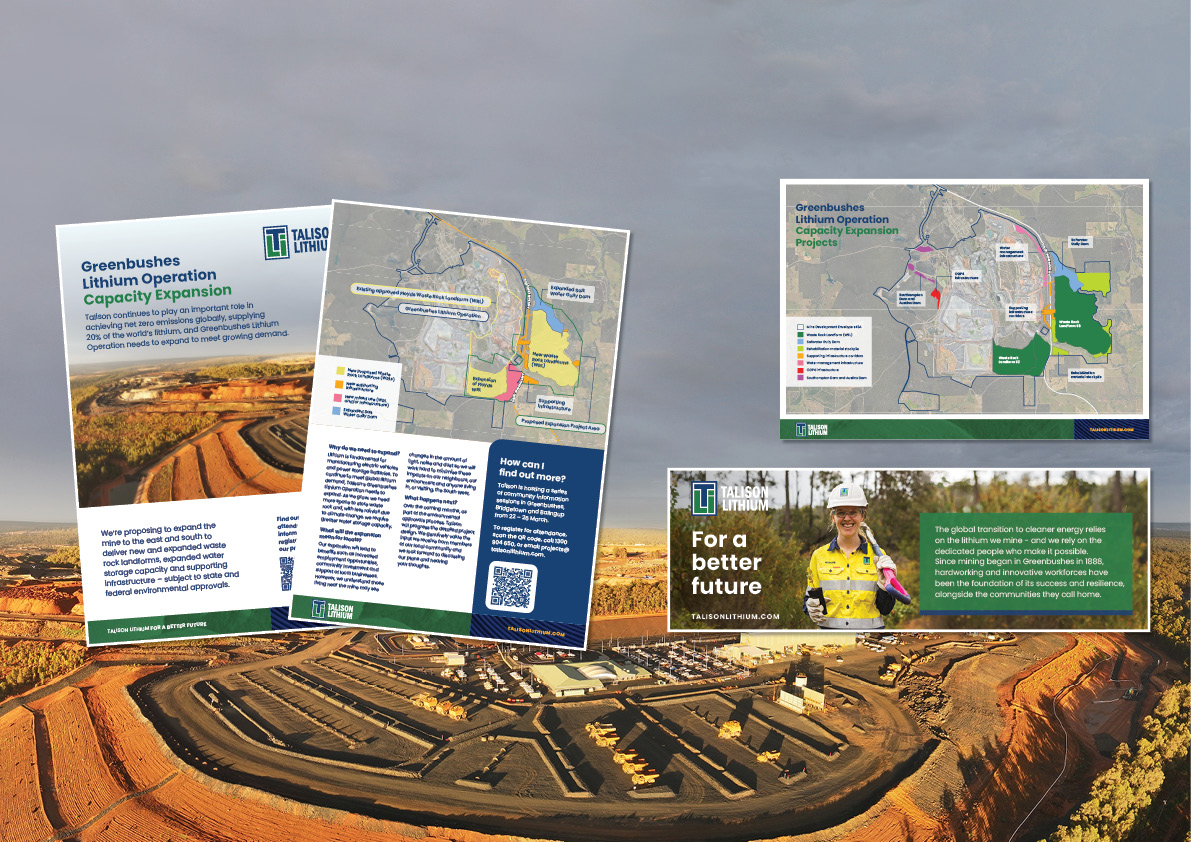
A robust, evidence-based foundation for the environmental approvals process, with transparent mitigation and management measures. The work strengthened regulatory confidence, informed project design and supported a clearer understanding of cumulative impacts and long-term change in the region.
Visit Greebushes expansion pageCase Study
Northern Star operates the Super Pit in Kalgoorlie, a globally significant mining operation located near established communities and within an environmentally sensitive region. As the company evolved in ownership, scale and public profile, it sought support to clearly articulate its social purpose, community contribution and commitment to high environmental, social and governance standards.
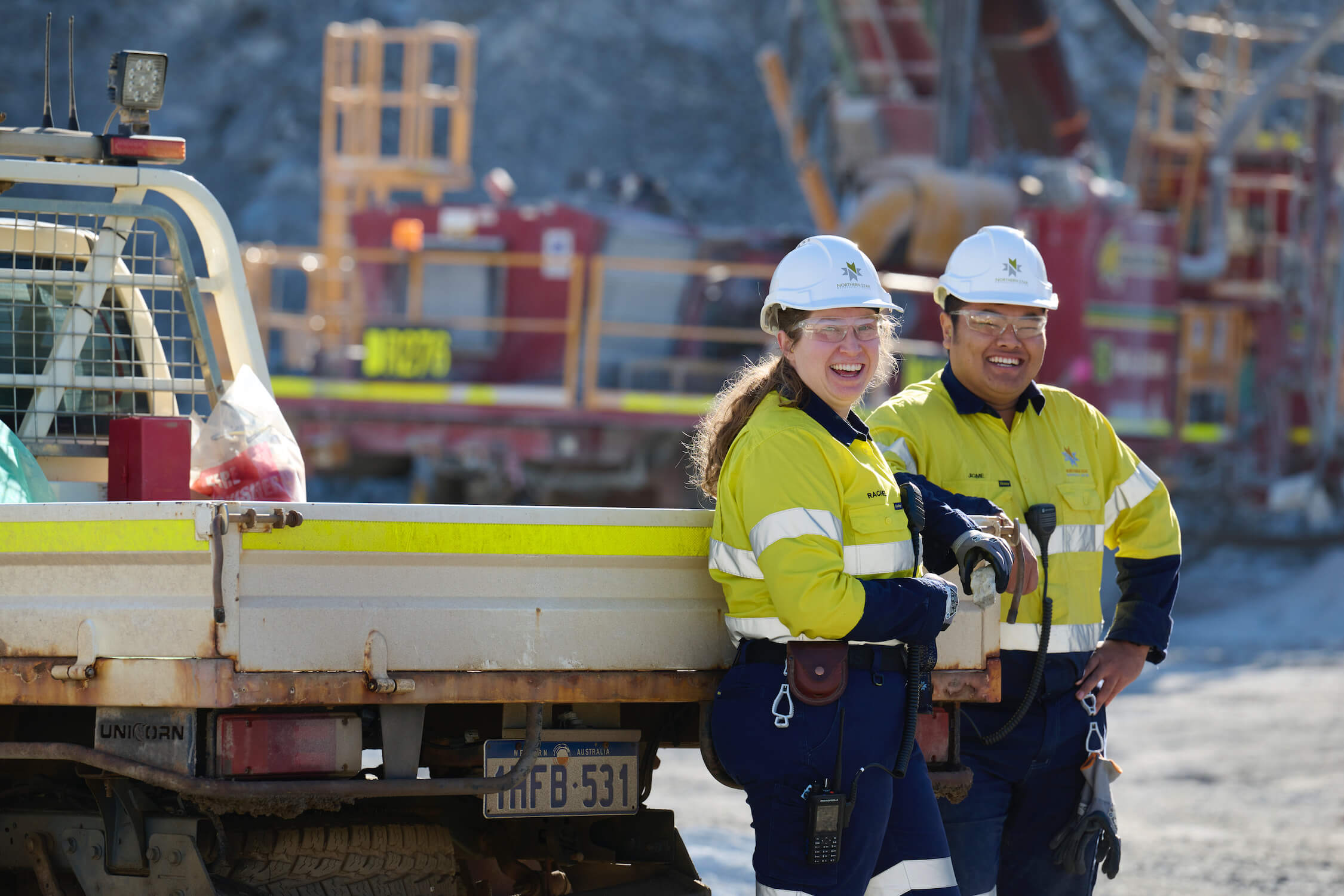
Delivered a social impact assessment to identify potential social impacts and opportunities for mitigation and benefit
Developed a consolidated communications and stakeholder engagement strategy informed by leadership and operational teams
Led proactive engagement with political decision-makers, regulators, landowners and local community representatives
Designed a stakeholder engagement strategy to support biodiversity restoration funding and offset requirements
Positive early engagement with priority stakeholders and the local community, stronger community confidence, and better alignment between commitments and delivery. ReGen continues to support the company as it embeds its social performance approach and progresses long-term community and environmental outcomes.
Social impact assessment specialists working alongside social performance, stakeholder engagement and regional development practitioners, with in-house environmental and social science capability. Meet the team.
IAP2 accredited practitioners, with engagement designed and documented to a standard an assessment record can rely on.
Senior in-house experience delivering approvals under Part IV and V of the Environmental Protection Act 1986, the Mining Act 1978, WA’s State Agreements framework and the EPBC Act.
We are engaged to report what the assessment finds, including where it is inconvenient. An assessment that flatters a project is worth nothing at the moment it is tested.
Perth headquartered since 2011, with personnel and established networks across the Pilbara, the Goldfields-Esperance region and the South West.
Findings translate directly into approvals strategy, government relations and community engagement, rather than into a report that sits on a shelf.
FAQ
A social impact assessment is a structured analysis of the consequences people experience when a project brings change. It assesses effects across eight categories: community, way of life, access, culture, health and wellbeing, surroundings, livelihoods, and decision-making systems. It covers direct, indirect and cumulative impacts, both positive and negative, and sets out how they will be managed.
Six steps: screening, scoping, engagement, impact assessment, mitigation and management, and integration and reporting. Scoping establishes the study area and social baseline. Engagement gathers and validates evidence. Assessment rates each impact by magnitude and likelihood to produce a significance rating. Mitigation applies the hierarchy and recalculates residual significance. Reporting delivers the SIA, a social risk and opportunity register and a public summary.
There is no single statutory trigger, but social surroundings is an environmental factor under the Environmental Protection Act 1986, and proposals assessed under Part IV are expected to address it with evidence. Planning decision makers weigh community impact, and lenders, certification schemes and funding bodies impose their own requirements. In practice, most significant projects need one. Our Project Approvals page sets out how assessment fits the wider pathway.
Typically three to nine months depending on scale, setting and the amount of primary research required. Regional projects with dispersed communities and Traditional Owner engagement sit at the longer end. Assessments that must be staged around approvals milestones or funding hold points are programmed accordingly.
Engagement is how you gather evidence from people. The assessment is what you conclude from it, tested against baseline data and rated against a defined significance framework. Engagement without assessment produces a consultation log. Assessment without engagement produces a document the community does not recognise. More on this in The case for proactive engagement and on our Stakeholder Engagement page.
The SIA identifies and rates impacts. The SIMP is the live management document that responds to them, setting out commitments, mitigation and enhancement measures, responsibilities, monitoring, governance and reporting. The SIMP is maintained and updated throughout the project as impacts, commitments and operating conditions change. See Social Performance.
The NSW Department of Planning, Housing and Infrastructure Social Impact Assessment Guideline, the EPA Environmental Factor Guideline: Social Surroundings and its interim technical guidance on Aboriginal cultural heritage, IAIA principles and guidelines, IFC Performance Standards, the Equator Principles, IRMA, and the UN Guiding Principles on Business and Human Rights where a human rights assessment is warranted.
Tell us the project, the setting and the approval you are working towards. We will tell you what the assessment needs to cover, how long it takes and what it costs. Or start with Project Approvals, Social Performance and The Insider.
ReGen Strategic
Level 3 / 34 Parliament Place
West Perth WA 6005