

The Insider/
Powering AI in WA
I recently argued that WA should set the terms for the data centre rush before it arrives, and two weeks later Canberra responded with some preliminary guidelines.
On 15 July the Prime Minister announced that large data centres will carry a legal obligation to underwrite new power supply, pay their full share of grid connection, and “put at least as much energy into our grid as they take out of it. To be net-generators, not net-users.” The plan goes to national cabinet next month, with legislation flagged for early 2027, and WA’s South West Interconnected System (SWIS) is in scope.
Offtake is what gets projects built
Over east, the pipeline is stalling. Financial commitments to new large-scale generation halved in 2025 to $4.4 billion, with onshore wind down 57 per cent. Across the Capacity Investment Scheme’s first four auctions, only 13 of 59 projects that won underwriting support have reached financial close. Wind is worst hit, facing rising interest rates, lower wholesale prices, supply chain constraints, and a shortage of long-term buyers for the power these projects will generate.
Recent action from the WA Government has shown that a languishing wind project benefits from a creditworthy buyer willing to sign a long-term contract at a workable price.
Data centres are close to an ideal buyer. Large, stable, round-the-clock load is the demand profile a wind and storage portfolio is built to serve. The Clean Energy Council set out how it could work in Powering the digital economy on 23 July: long-term contracts with new projects, certificates covering the gap while those projects are built, and an obligation that ramps with each facility’s own load growth.
WA has just shown how fast this can move
On 22 July construction started on Neoen’s 179 MW Narrogin Wind Farm, creating more than 250 jobs at peak and enough generation for close to 100,000 homes. The Energy Minister, Amber-Jade Sanderson, can take much credit for this: government-owned enterprise Synergy agreed to buy the power, while the Cook Government designated these wind farms Priority Projects under the State Development Act.
Narrogin is one of four. In March the Energy Minister directed Synergy to sign power purchase agreements with Neoen, with Zephyr Energy for the 470 MW Parron Maam Marang Farm, with Kondinin Energy for the 130 MW Kondinin Wind Farm, and with Bright Energy Investments for Warradarge Stage 2. Together they are expected to power more than 700,000 homes.
That is the mechanism a data centre offtake would extend, with private capital in the buyer’s seat instead of the state’s.
Partnership is not realisation
Even at this heady pace, Narrogin, Kondinin and Parron Maam Marang will not be operating for three years.
A data centre, by contrast, can go from dirt to operating in as little as two years.
Demand moves faster than almost anything that supplies it. And Synergy’s coal plants are closing on a timetable that will see around 30 per cent of the south west’s generation removed from the system by 2030.
Which is why gas is part of the mix
Premier Roger Cook put it plainly on 22 July, WA is securing its future through “renewables backed by batteries and WA gas.”
In June, Cook and Sanderson stood at Kwinana for the sod turning on AGL’s K2 project. Four new dual-fuel turbines add 220 MW, taking the site to around 340 MW of fast-start capacity and targeting operations by the end of 2027. AGL committed $490 million from its own balance sheet. The right kind of asset, an existing site with an existing connection, privately funded, and government providing support rather than the capital.
Demand on this scale will not be met by one solution. It needs new wind and solar, batteries, transmission, demand flexibility and firming, and gas peaking capacity has a place in that mix while the renewables and the wires catch up. What matters is that it operates as a bridge, with the renewable share rising over time until the load is carried by new generation.
The window is open now
Because new gas takes three to five years, plants that need to run when coal exits have to be decided now. Credible private proponents are preparing peaking projects targeting 2029 and 2030 at their own risk and cost.
Western Power is approached by a broad sweep of proponents, and it has a role here beyond regulating connections and building network. It can act as a facilitator, working with the proponents whose projects genuinely stack up to find workable connection points, realistic and binding timeframes, and enough certainty for a board to commit.
Attract the investment
The lesson of the past few months is that WA knows how to unlock investment. A Synergy offtake and a Priority Project designation got Narrogin building. But the state balance sheet cannot be the buyer for every project the SWIS needs, and it does not have to be.
The proposed federal obligation could mean every large data centre coming to WA will be required to underwrite new generation. That is a pipeline of private buyers that could be investing heavily in WA renewables and accelerating our generation capacity, which we should be competing hard for. A proponent weighing Western Australia against Queensland or Victoria is deciding on power availability, approval speed and clarity of rules. WA can compete on all three.
This private investment frees public money for much needed transmission infrastructure. The $1.4 billion Clean Energy Fund and Clean Energy Link are the right call but require even more investment. The state should not be building generation it can attract others to fund, and every dollar that goes into a turbine is a dollar not spent on the corridor that unlocks a gigawatt.
The ReGen view
WA has shown this year how this works. Sign as a buyer to unlock renewables. Designate and clear the path so private capital builds the firming. Put the public money into wires. And share the benefits with host communities, as the state’s own Community Benefits Guideline already contemplates.
The state should go to national cabinet supporting the net-generator obligation. New generation and firming should be contracted inside the WEM. Here is the gas peaking capacity that bridges the coal exit. Here is where the public capital goes, which is transmission.
At ReGen Strategic we operate at the intersection of community engagement, stakeholder management, government relations and project approvals. Every project in this story, whether a wind farm, a peaking plant or a data centre, needs genuine social licence as my colleague Rod Mapstone has written, and the same early, proactive engagement to earn it. Through the Approvals Navigator, our joint practice with Tactica Advisory, we bring senior WA government experience to projects that need approvals, energy connection and community strategy moving together.
If you are planning a data centre in WA, holding a project waiting for an offtake, or preparing firming capacity for the coal exit, let’s chat.
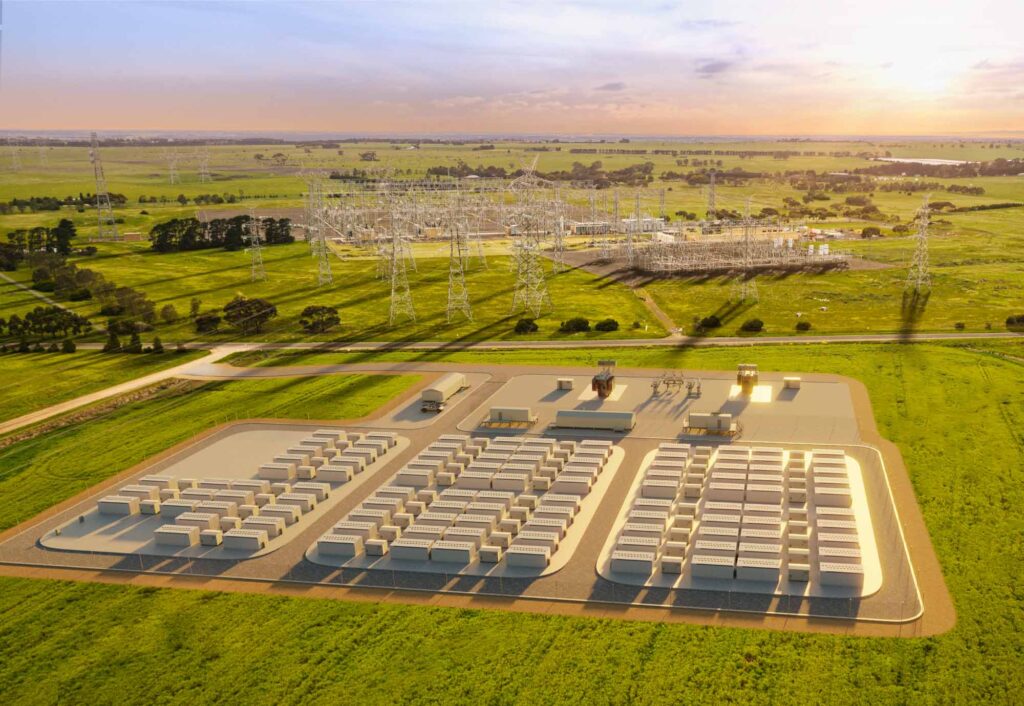
Image Source: Narrogin Wind Farm