The Insider/
Social licence to operate in project development: still relevant, still misunderstood
Social licence to operate is one of the most used and least understood concepts. It often appears in board papers, approvals documents and media commentary in ways that do not reflect what the term actually means or demands. It is something that many organisations believe they have, until realising too late that they never had it to start with.
So, what is it? Why does it still matter and why do many organisations get it wrong?
What social licence to operate actually means
Firstly, social licence to operate (SLO) is not a permit or a project milestone. It is the ongoing level of approval that an organisation or project must continuously earn from the communities and stakeholders it impacts. The keywords here are “ongoing” and “continuously earn”.
The concept was formalised in 1997 by Canadian mining executive Jim Cooney and developed through mining industry practice before being researched and tested. In Australia, the CSIRO’s studies on SLO in mining communities are amongst the most influential research on the topic.
In practice, SLO moves across a spectrum: opposed, withheld, neutral, accepted, approved, and advocated.
A community that is actively opposed to a project is different to one that is simply withholding acceptance. Equally, a community that has moved beyond approval to become an active advocate for a project – defending it publicly, supporting its approvals, and identifying with its outcomes, is different to passive approval.
In parallel, it is legitimacy, credibility, and trust that determine the level a project occupies at any given time. A project is regarded as legitimate when the community sees it as adopting its social and cultural norms and when it contributes to community wellbeing. Credibility is built on behaviour over time, like providing accurate and timely information and fulfilling commitments. Finally, there is trust which is a measure of the community’s confidence that organisations are making decisions in their (the community’s) best interests or at least in their mutual interests.
Who grants SLO and who can withdraw it?
Almost all projects involve a diversity of stakeholder groups each with different expectations and levels of influence (often mapped against the ‘Mendelow Matrix’). This means an organisation can gain SLO approval from one group and have it withheld by another. The nuances of those stakeholder relationships must be understood and managed independently to enhance and protect SLO.
In Australia, this complexity intersects with the rights and interests of First Nations communities. Native title rights, cultural authority, and connection to Country are legally and culturally distinct from the interests of other stakeholder groups. They are not to be balanced against other community views; they are rights. Treating First Nations engagement as just one part of community consultation is a commercial and reputational risk
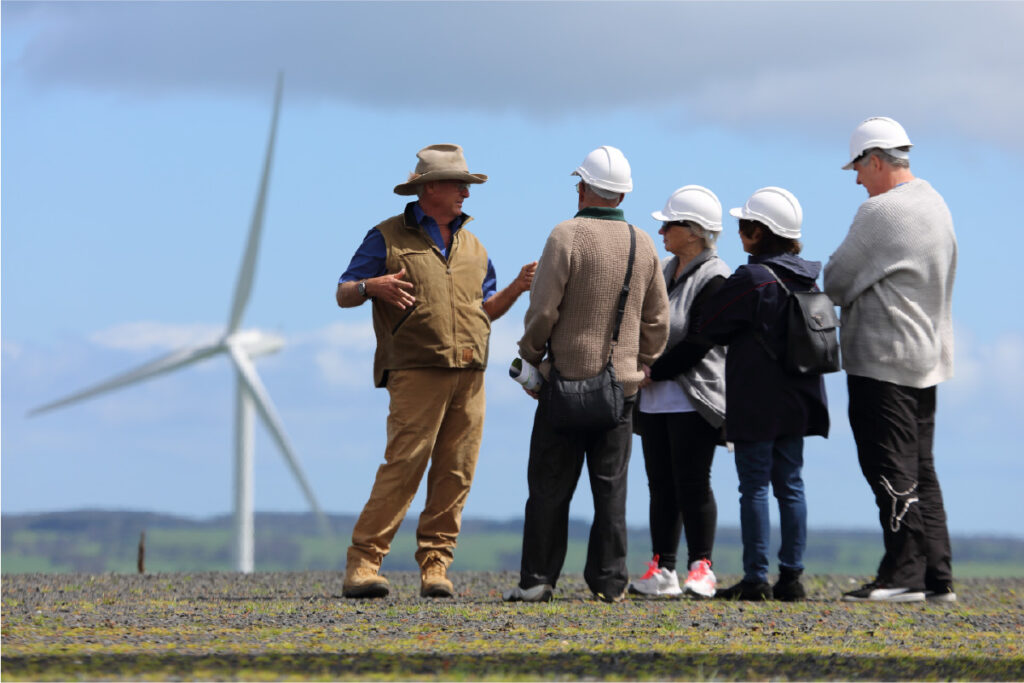
It is also important to distinguish between public support and local community SLO. A project can attract strong national or regional support and face withheld SLO from the host community at the same time. If we look at renewable energy as an example, Australians broadly support the clean energy transition, yet transmission and generation projects continue to face local opposition from communities who feel the costs of that transition are being imposed on them without regard for their concerns.
Where those concerns go unresolved, it may not stay contained to individual projects. It can shape planning and policy settings across entire sectors, sometimes in ways that constrain development beyond the original local concerns.
How SLO is built and how it is lost?
The CSIRO research found that quality of contact between an organisation and its community was the strongest predictor of SLO trust, not the quantity. Whether communities felt they were genuinely heard and treated equitably (procedural fairness) mattered more than the volume or frequency of engagement. In previous editions of The Insider, we discussed this as one of the most common failures in community engagement – organisations defaulting to providing information when conversation is required. Workshops, focus groups, and information sessions that produce no visible change in project design or scope do not build SLO, they generate a record of activity.
Also, SLO is not static, it is dynamic, context-specific, and fragile. Communities are continually assessing organisational behaviour and just one broken promise can erode years of relationship building. This is further complicated by the distinction between corporate and site or project-level SLO. An organisation may hold broad SLO acceptance or approval based on its brand and track record, while a specific project may not.
Why it still matters
SLO matters because communities have a legitimate interest in the decisions that shape their environment, their livelihoods, and their way of life – and more than ever, they have the means and motivation to demonstrate that interest. Organisations that understand this are building community relationships before projects are defined, designing engagement around what communities actually value, honouring commitments, and responding when things change.
Enhancing and protecting SLO requires more than goodwill and good intentions. For most organisations, it means independent assessment, structured stakeholder mapping and analysis, and the willingness to act on the outcomes, including when the findings are unflattering. At the very least it requires an honest appraisal of the gap between business objectives and community expectations and experience.
Assumed social licence is either unmanaged risk or at risk of becoming unmanageable.
At ReGen Strategic, we understand that SLO is enhanced and protected through deliberate, ongoing, and genuine community engagement. Our work with organisations across the resources, energy, infrastructure, and not-for-profit sectors is grounded in this approach. We help clients understand where they genuinely sit on the spectrum of community approval, what is driving the gap between their expectations and experiences, and what a credible, sustained engagement strategy looks like in practice.
Image Source: Clean Energy Council