

The Insider/
Good intentions, worse emissions: a regulation problem in WA’s energy transition
Western Australia’s energy transition will not be won or lost on ambition.
The targets are set and the technology exists. What decides whether the SWIS cuts emissions, or just moves them around, is sequencing: whether firm capacity i.e. power generation that can be dispatched on demand regardless of weather, stays online long enough for renewables to replace it, and whether regulation reflects how these assets perform in the real world.
Firm capacity still has a job to do
No credible pathway to net zero on the SWIS jumps straight from coal to a fully renewable grid. WA’s own SWIS Demand Assessment (2025) modelled a least-cost pathway for the system’s future. Under that scenario, renewable generation could reach 80% of energy consumed from 2030, expanding to 96% by 2042, with the balance made up by storage and flexible gas firming capacity. It is one modelled scenario, not a guarantee, but it reflects the government’s own thinking on what a workable transition looks like.
Gas is not the destination in that scenario but it is incredibly important to the transition. Gas is the thing that keeps the lights on while storage and renewable generation scale to the point where they can mostly carry the system on their own.
Therefore, how gas is regulated during the transition is critical.
When regulation doesn’t reflect how the market works
WA’s Wholesale Electricity Market dispatches generation from lowest cost to highest until demand is met, and pays every generator running at that point the same clearing price.
Registered facilities must offer their full certified capacity into the market and are not permitted to withhold generation, so a facility cannot choose to scale back output to stay under an emissions condition. If the market clears above its cost of running, it generates.
This is where a condition can produce an effect at odds with its purpose. When the EPA assesses a proposal under Part IV of the Environmental Protection Act 1986, the resulting Ministerial Statement often includes conditions requiring the facility to offset its greenhouse gas emissions, commonly through surrendering ACCUs. That condition sits entirely outside the electricity market, which operates under its own, separate set of rules. If the cost of meeting it gets built into a facility’s cost of generation, that facility becomes more expensive in the market’s price stack. A more expensive generator is dispatched less, and cheaper generation fills the gap.
Generation efficiency varies meaningfully across the SWIS gas fleet. The Clean Energy Regulator’s published data on designated generation facilities shows some of the most efficient combined cycle gas plants on the SWIS operating at around 0.38 to 0.40 tonnes of CO2-e per MWh. Most other SWIS gas generators cluster between roughly 0.5 and 0.8 tonnes of CO2-e per MWh, and open-cycle peaking plants, which run only at the highest points of demand, can exceed 1.0 tonne of CO2-e per MWh.
In a market that dispatches purely on price, an offset condition that pushes an efficient facility further up the price stack risks having its output replaced by a less efficient one, an outcome that could increase total system emissions rather than reduce them.
This tension between Ministerial Statement conditions and how the wholesale market allocates generation is a design question, not a settled fact about how the system behaves in every case, and it is worth being precise about which parts of WA’s regulatory architecture are in play.
Ministerial Statement GHG offset conditions are set facility by facility, through the EPA’s assessment process. Separately, and through a different process entirely, Energy Policy WA’s Reserve Capacity Mechanism Review has proposed introducing emissions thresholds that would determine which generators receive reserve capacity revenue in the electricity market, alongside a 10-year transition exemption for existing flexible gas plant. That reform addresses capacity payments, not offset conditions, so it is not solving the same problem. But it reflects a comparable judgement from within WA’s own energy policy machinery.
A gas fleet with genuinely different performance profiles needs a transition pathway that accounts for those differences, rather than a single rule applied uniformly regardless of where an individual facility sits on that spectrum.
Why this matters to us
Renewables still have to get built at a pace that makes this argument matter, and that depends on a separate set of challenges: financing costs, construction costs, and how well projects bring host communities along early rather than late. That’s a real challenge in its own right, and one we work on directly with renewable project proponents. But it doesn’t change the point at hand. While firm capacity remains part of the system, the way it’s regulated should reflect how efficiently it operates and how the market allocates generation, not treat every gas asset as interchangeable.
At ReGen, we work with generators managing the reality of operating in a market that is transitioning under them. Getting the sequencing right, so that firm capacity retires as replacement capacity comes online, and regulation rewards genuine performance rather than penalising it uniformly, is not a side issue to the energy transition. It is the transition. Get it wrong, and WA risks a grid that produces more emissions while everyone congratulates themselves on ambition. Get it right, and the state has one has a good position to make it work.
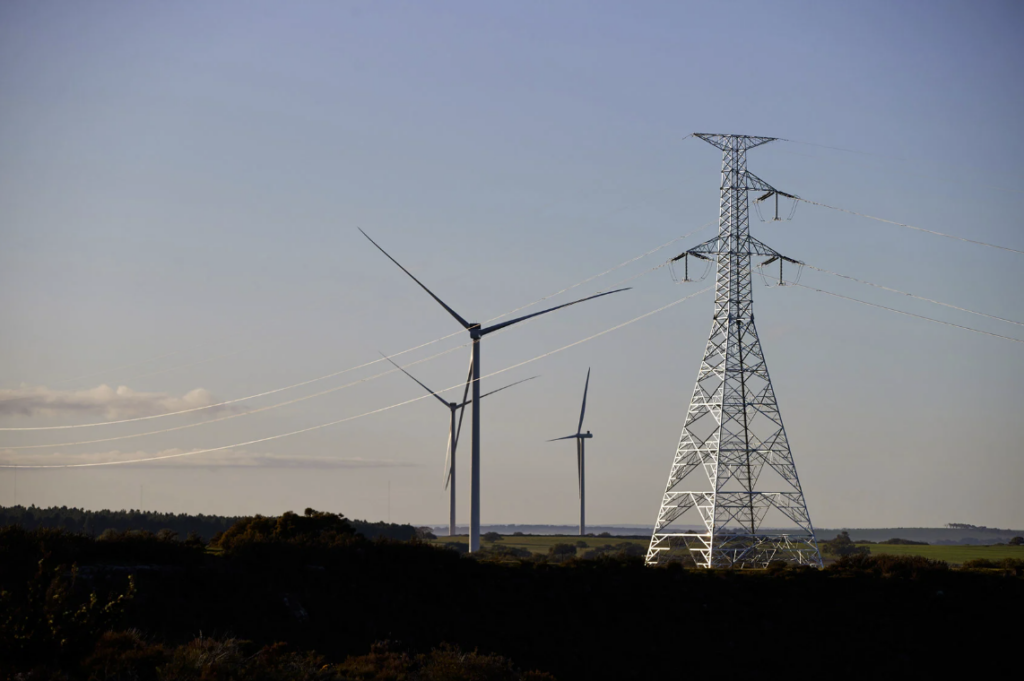
Image Source: Western Power